Standing Strong When Serving Jesus Is Hard
23 September 2026
Following Jesus does not always bring obvious opposition. Sometimes the greater challenge is the persistent pressure that gradually wears us down. How can Christians remain faithful when serving Jesus becomes difficult, costly or simply exhausting?
This article draws on WorldShare’s conversations with Mark Ellis, Chief Executive of Keswick Ministries, Bible teacher Andy Robinson, and Graham Albans, Director of Mission and Outreach at Grace Community Church in Bedford, recorded at Keswick Convention 2026 for the On Mission with WorldShare podcast.
Some challenges arrive suddenly, while others build almost unnoticed. A difficult conversation, a relationship under strain, an unanswered prayer, a health concern or the discouragement of seeing little visible fruit may not seem overwhelming on its own. Together, however, these pressures can gradually drain our strength and confidence.
Mark Ellis describes this as the “grinding down” Christians may experience. Spiritual opposition is not always clearly recognisable. Sometimes it is more like a pebble in a shoe: small enough to keep walking with, but persistent enough to make every step harder.
We may assume that serving Jesus should feel easier, or that difficulty means something has gone wrong. Yet the Bible gives us realistic expectations. Following Christ brings deep hope, but it also calls for faithfulness, perseverance and a willingness to carry the cross.
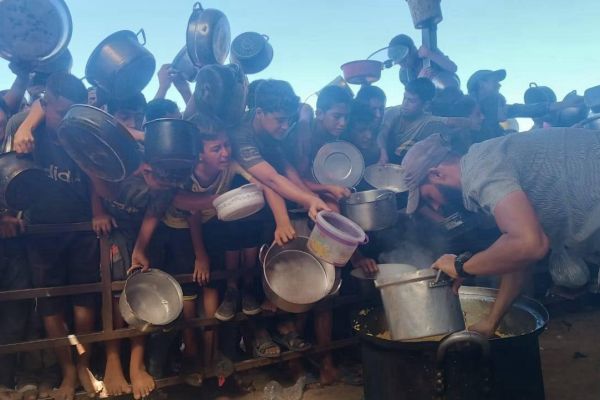
Speaking about spiritual opposition at Keswick Convention 2026, Mark explained that Christians may naturally notice the larger battles while overlooking the quieter pressures.
“There’s an awful lot of grinding down that happens. I think you meet so many saints who are just wearied by the pebble-in-the-shoe stuff.”
A single pebble may appear insignificant, but walking with one for long enough becomes painful. In the same way, persistent pressures can gradually weaken our confidence in God and our willingness to continue serving. Mark suggested that they may come through relationships, family circumstances or health, rather than through the area of ministry directly in front of us. Eventually, we can become weary in the battle and find it difficult to face another day.
This does not mean that every inconvenience, illness or disagreement should be labelled as spiritual attack. Christians can fall into two opposite errors: seeing spiritual opposition behind everything or living as though it does not exist at all.
Mark compared this to the way people are trained to recognise counterfeit banknotes. They spend most of their time studying the genuine article. In the same way, Christians become better able to recognise what is false by knowing Christ and his truth more deeply. Our main focus should not be the darkness, but Jesus, who has already overcome it.
We should not assume that every persistent difficulty simply has to be accepted. Some situations need to be addressed; relationships may need repair and patterns of service may need to change. We can also ask God to remove what is causing pain. The possibility that he may not change our circumstances does not mean that we should not ask him.
Paul pleaded three times for his “thorn in the flesh” to be taken away. God did not answer as Paul had hoped, but neither did he leave Paul to endure it alone. Instead, God assured him:
“My grace is sufficient for you, for my power is perfected in weakness.”
2 Corinthians 12:9, CSB
Sometimes God changes our circumstances. At other times, he gives us the grace to continue and teaches us to depend more fully on his strength.
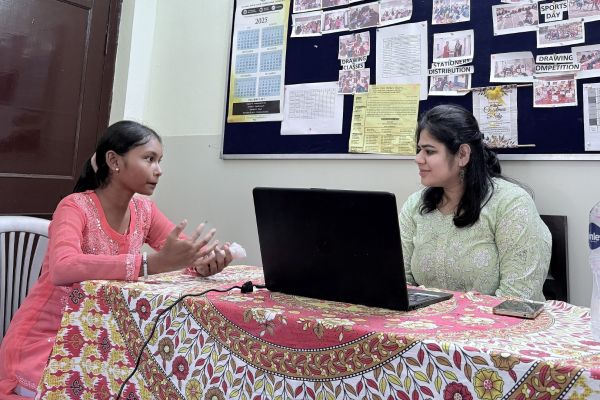
Persistent pressure becomes even more discouraging when we assume that following Jesus should be relatively straightforward. If difficulty takes us by surprise, we may interpret it as evidence that something has gone wrong.
Teaching from Matthew 8 to 12 at Keswick Convention 2026, Andy Robinson highlighted the importance of realistic expectations. In Matthew 10, Jesus prepares his disciples for mission. Some people will welcome their message, while others will reject it. Jesus does not promise effortless success, but neither does he tell them that their mission will be fruitless.
As Andy observed:
“It’s always useful for anything to have right expectations.”
Opposition does not necessarily mean that we have taken a wrong turn. Sometimes it is part of what faithfulness to Jesus involves. Equally, a lack of immediate results does not mean that our prayer, compassion or Gospel witness has been wasted.
When Jesus begins to involve his disciples in mission, his first instruction is to ask the Lord of the harvest to send workers. Mission belongs to God before it belongs to us. That truth does not make our contribution unimportant, but it releases us from carrying a responsibility that was never ours alone.
For some Christians, opposition is much more visible.
During his On Mission with WorldShare conversation, Graham Albans reflected on meeting Christians in parts of Mexico where following Jesus can bring rejection, discrimination and danger.
Some believers had been cut off from their families and communities. One pastor was charged higher rent because of his faith, while a teacher’s wages and classroom opportunities had been reduced. Other Christians had experienced vandalism, threats or damage to their homes and vehicles.
Persecution does not always take the form of imprisonment or physical violence. It can also involve prolonged emotional, relational and economic pressure, gradually making it harder for someone to continue following Jesus openly.
Yet Graham met Christians who remained faithful because they recognised how deeply they needed Christ and how urgently others needed to hear the Gospel. One Christian serving in Mexico put the challenge starkly:
“If we don’t stick in here when it’s hard, who else will? If we don’t tell them about Jesus, who else is going to?”
Those words stayed with Graham after he returned to the comparative comfort and freedom of life in the UK.
“If they can stick at it, I can definitely stick at it.”
Graham did not use their experiences to dismiss the difficulties Christians face here. Instead, they challenged him to reconsider whether awkwardness, embarrassment or fear of another person’s response should prevent him from speaking naturally about Jesus.
The perseverance of Christians elsewhere should not make us feel guilty or encourage us to pretend that our own struggles do not matter. Their example can, however, challenge our assumptions and remind us what God can sustain his people through.

Andy suggested that comfort may be a particular temptation for Christians in the West.
“I do think the potential idol of the Western Church is comfort.”
Comfort is not wrong in itself. Rest, safety, hobbies, holidays and enjoyable experiences can all be received as gifts from God. The question is whether protecting our comfort begins to matter more than obeying him.
Even good things can fill our attention so completely that little room remains for sustained prayer, sacrificial generosity, service or engagement with global mission. We can become more concerned with preserving the lives we have built than asking God how he wants us to use them.
Christian faithfulness is not only about avoiding what is wrong. Scripture also warns against knowing the good we should do and failing to do it (James 4:17). Jesus calls us to love God with all our heart, soul, mind and strength, and to love our neighbour as ourselves (Mark 12:29–31). That reaches further than offering God whatever remains after our other priorities have been satisfied.
This does not mean seeking danger, rejecting every pleasure or assuming that the hardest choice must be the most faithful one. It means asking honestly whether comfort and distraction are shaping our decisions more than obedience. Are we avoiding something God has made clear because responding would be inconvenient or costly?
Jesus speaks openly about taking up our cross and losing our life for his sake. Andy pointed out that this is not sacrifice for its own sake. Jesus says that those who lose their lives for him will find true life. We may be called to surrender things we value, but we gain Christ.
This is not about earning God’s approval through sacrifice. It is about refusing to let comfort determine the limits of our obedience.
Perseverance is sometimes imagined as an individual Christian enduring hardship through sheer determination. That is unlikely to sustain us for long.
In Ephesians 6, the repeated instruction is to stand. Mark explained that standing strong is not about defeating evil through our own effort, but remaining firm in Jesus Christ, who has fought for us and won.
God also gives us one another. Local churches can help us recognise when we are becoming weary, remind us of what is true and carry burdens that have become too heavy to bear alone. Prayer, encouragement and honest conversation can bring hidden struggles into the light.
This is also part of the value of the global Church. Stories from Christians serving in different circumstances remind us that we belong to something much larger than our own congregation, organisation or country.
WorldShare’s local Christian partners serve communities facing poverty, injustice, illness, conflict and opposition. Their faithfulness does not mean that they never feel discouraged or afraid. They continue through God’s strength, supported by their Christian communities and the prayers of believers around the world.
When WorldShare supporters pray, give, share our partners’ stories and encourage their churches to become involved, they remind local Christians that they are not serving alone.
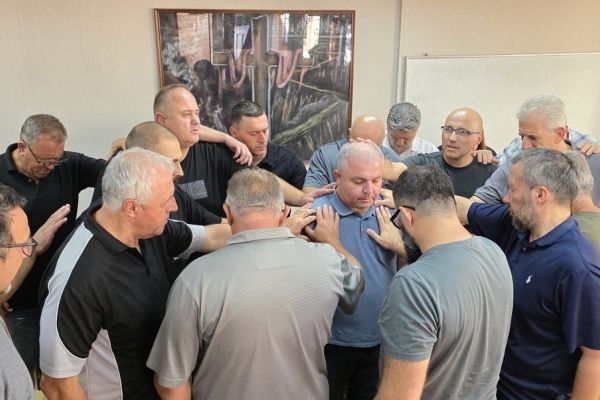
Standing strong does not always involve one great act of courage. It often means taking the next faithful step when we would rather stop. It may mean praying again, beginning a difficult conversation, continuing to serve when little appears to change or asking other Christians to help carry a responsibility that has become too heavy.
Perhaps a persistent pressure is gradually draining your confidence. Or perhaps there is something you know you should do, but have delayed because responding would disturb your comfort.
Please pray for WorldShare’s local Christian partners as they share the Gospel and serve vulnerable communities amid pressure, opposition and hardship. Ask God to protect them, renew their strength and provide the people and resources they need.
Then ask him what standing firm looks like where he has placed you. You may not be called to seek danger or attempt something extraordinary. You may simply need the grace and courage to take the next faithful step.
