Do You Need a Special Calling to Be Part of Global Mission?
22 September 2026
Global mission can sometimes appear to belong to a particular kind of Christian, someone with a dramatic calling, specialist training or plans to move overseas. Yet God also guides people through gradual convictions, ordinary occupations and the different abilities, interests and opportunities he has given them.
This article draws on WorldShare’s conversations with Mark Ellis, Chief Executive of Keswick Ministries, Graham Albans, Director of Mission and Outreach at Grace Community Church in Bedford, and Bible teacher Andy Robinson, recorded at Keswick Convention 2026 for the On Mission with WorldShare podcast.
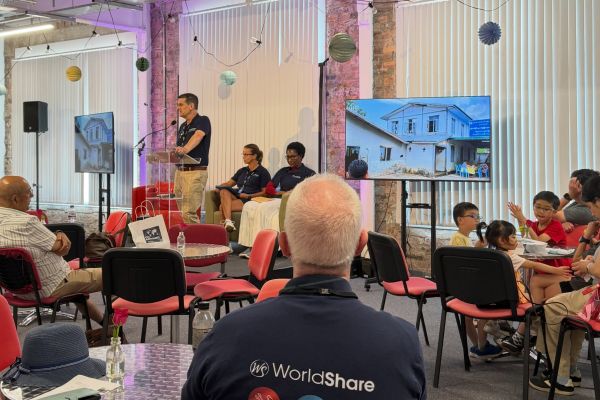
Part of Mark Ellis’ uncertainty came from his professional background. As an accountant, he had wondered whether his experience was somehow less relevant to global mission than qualifications in medicine or another role commonly associated with overseas service.
Two comments from other Christians helped challenge that assumption. One speaker reminded him that what matters most is who we are, not where we are. Another pointed out that mission agencies need people with business skills too.
Those observations helped Mark recognise that God could use the abilities and experience he already possessed. His accountancy background was not wasted time or an obstacle to mission. It was part of what he could bring.
Global mission depends on people with many different abilities. Christian ministries may need biblical teaching and pastoral leadership, but they also need people who understand finance, administration, healthcare, education, communications, safeguarding, technology, governance and practical trades.
Our abilities do not have to sound overtly spiritual before God can use them.
Andy Robinson developed this idea by encouraging Christians to recognise that God has deliberately made people different from one another. Some feel comfortable speaking to a large audience, while others are particularly good at building relationships with individuals. A professional skill, practical ability or personal interest may create opportunities that someone else will never have.
Andy suggested asking:
“What are the unique abilities and interests the Lord has given me that might actually be quite different to what he’s given other people? That’s wonderful. That’s his wisdom.”
An interest does not necessarily contain a hidden instruction from God, but it may be something he can use. A hobby can create relationships. Professional experience can strengthen a Christian ministry. Communication skills can help tell stories that would otherwise remain unheard. Financial resources can help sustain work in communities we may never visit.
The question is not whether our abilities match a traditional picture of mission. It is whether we are willing to place what God has given us at his disposal.
Many Christians assume that a call to global mission should arrive as a clear, unmistakable moment. Perhaps God will point them towards a particular country, ministry or role and leave little room for doubt.
For some, God’s direction may become clear through a defining experience. For others, including Mark Ellis, the journey is much more gradual.
Before becoming Chief Executive of Keswick Ministries, Mark trained and worked as a chartered accountant. Throughout university and his early working life, however, he found himself returning to the same concern:
“I couldn’t get away from the fact that there are people around the world who don’t have the opportunity to hear about Jesus.”
Mark did not initially know what part he might play in addressing that need. As he read the Bible, attended conferences and continued thinking about global mission, his concern developed into what he described as a “growing, slow conviction” that this was the right direction to pursue.
Rather than receiving the full plan at once, he took one step at a time. His journey eventually led him from accountancy into mission communications and cross-cultural ministry in Asia.
A gradual calling is not a lesser calling. God may guide someone through a concern that persists, a need that becomes difficult to ignore or a growing desire to use their life and abilities in a particular way.
It is possible to spend so long waiting for a dramatic call that we overlook what God has already made clear.
Christians have already been called to follow Jesus, love God and their neighbours, live holy lives and make disciples. Those commands are not suspended while we wait for a more personal set of instructions.
A growing concern for global mission may not arrive with a complete plan, but it can still be something worth exploring. Rather than waiting indefinitely for certainty, we can pray, seek wise advice and gently push a few doors to see whether God opens them.
That does not mean treating every strong desire as a divine calling. Discernment requires both willingness and humility. We should not run from something God has made clear, as Jonah did. But neither should we force our way through a closed door simply because an opportunity excites us or appears adventurous.
An obstacle may be a reason to pause, pray and seek further wisdom. Equally, difficulty or risk does not automatically mean that a direction is wrong.
In Acts 16, the Holy Spirit redirected Paul and his companions before a vision led them towards Macedonia. In Philippi, Paul and Silas were beaten and imprisoned, yet God worked even through that unexpected and dangerous situation. Their response led to the jailer asking what he must do to be saved, and he and his household came to faith in Jesus. What appeared to be a disastrous interruption was used by God as part of his wider purpose (Acts 16:6–10, 22–34).
Where a decision carries serious consequences for ourselves or others, it is especially important to test our sense of direction through Scripture, prayer and the counsel of mature Christians who know us well. Courage is not the same as recklessness, but faithfulness will not always be the safest or most comfortable option.
As we continue seeking God and obeying what he has already revealed, our direction may gradually become clearer.
Graham Albans also experienced a gradual change of direction.
For ten years, Graham worked at BBC Radio 2, including producing major breakfast shows. Working for a church had never been part of his plan and, when the possibility was first raised, his initial response was to say no.
Yet the idea planted a seed. Graham had already been giving time to mission and outreach alongside his broadcasting work. When the church later returned with a specific opportunity, he began to recognise how closely the role matched the work he cared about.
The decision still took time. Through prayer, conversations with his wife and guidance from church leaders, the possibility eventually became what he described as an “unignorable pull”.
That did not mean his previous years in broadcasting had been wasted or spiritually unimportant. Graham had built relationships with people whom many Christians might never meet, but he believes the same principle applies to every workplace and community:
“God doesn’t get the postcode wrong. God puts you in a particular place for a reason, for a time.”
Someone does not need to work in a church or Christian organisation before God can use them. Every day, Christians build relationships with colleagues, neighbours, other parents, customers and members of sports teams or community groups.
Graham explained that faith can become a natural part of sharing our lives with people over time. A conversation about the weekend might include church. A discussion during a difficult period might create an opportunity to explain where our hope and peace come from. This is not necessarily a formal presentation of the Gospel. It is allowing our relationship with Jesus to be an authentic and visible part of who we are.
A change of career or country may sometimes be right. But we should not become so focused on a possible future calling that we overlook the people and opportunities God has placed around us today.
For some Christians, responding to God’s direction will involve crossing cultures or moving to another country. Their willingness to go should be valued, encouraged and supported.
But crossing a border is not the only meaningful way to participate in global mission.
WorldShare does not send missionaries overseas. Rather, we stand alongside local Christian ministries as they share the Gospel and serve people within their own countries and communities. Their local leadership is at the heart of the work, but Christians elsewhere still have an important part to play.
This may involve praying faithfully for a particular partner or community, giving regularly or responding to an urgent need. Some people help their church engage more deeply with global mission or tell others what God is doing through local Christians. Others use their professional experience or practical skills to support the work.
Someone may never visit the community they support, but their contribution is not a lesser alternative to going overseas. Through prayer, generosity, encouragement or practical involvement, they can play a meaningful part in helping local Christians serve vulnerable people, share the hope of Jesus and continue their work for the long term.
Discernment is essential in any missional decision. It is rarely helped by comparing our story with someone else’s. A dramatic calling does not make one person’s obedience more valuable, while a quieter journey of prayerful commitment is not less spiritual.
We should bring any concerns before God, examine them in the light of Scripture and talk with trusted Christians who know both our strengths and weaknesses. We can also take an appropriate first step, perhaps by learning more, beginning to pray regularly, volunteering, supporting a ministry or exploring how our abilities could be useful.
Sometimes that first step confirms a growing sense of direction. At other times, God uses it to redirect us. The goal is not to manufacture a special calling or to pursue something impressive. It is to remain attentive, obedient and available to God.
You may never experience one defining moment that determines your involvement in global mission.
It may begin with a need elsewhere you cannot easily dismiss. It may grow as you learn about a local Christian partner, pray for a particular community or begin using your experience to support work that matters to you.
God may call you somewhere new. He may also keep you where you are but change the way you see your work, relationships and resources.
A dramatic calling is not the measure of faithful obedience. What matters is remaining attentive to God, responsive to what he has already made clear and willing to explore the needs and opportunities he brings to our attention.
Perhaps the better question is not simply:
Have I received a special calling?
Perhaps it is:
What has God placed on my heart, where has he placed me, and what has he given me to use?
Exploring that question may be the beginning of your own part in his global mission.
